The Venerable Schuman - Evolving his Legacy
Venerable Robert Schuman (1886–1963): Father of Europe and Servant of Peace
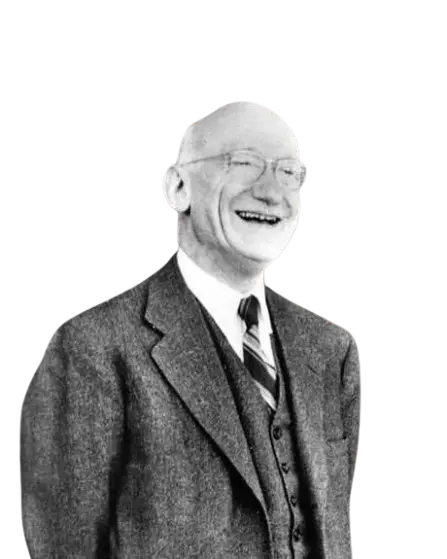
Born in Luxembourg in 1886 and later a citizen of France, Robert Schuman grew up at the crossroads of Europe's fiercest conflicts. Twice, in World War I and World War II, he witnessed the devastation wrought by division. Imprisoned by the Gestapo during the Nazi occupation of France, Schuman emerged from these trials with a radical vision: that enduring peace could only be built through unity, not revenge.
Historical Journey
1940: After the fall of France to Nazi Germany, Schuman served briefly as Under-Secretary of State for Refugees. His refusal to collaborate with the Vichy regime led to his arrest by the Gestapo in September 1940.
1942: After he escaped imprisonment, some communist compatriots—confused by wartime chaos and propaganda—accused him of treason for his earlier administrative role under the defeated government. Yet it was precisely his unwavering loyalty to the ideals of justice and freedom that had made him a target of both the Nazis and collaborators.
1945: The truth of his resistance and moral courage was recognized, and he was called to serve in rebuilding a devastated France.
1950: On May 9, as French Foreign Minister and inspired by the ideas and concepts developed by Jean Monnet, Schuman proposed the revolutionary Schuman Plan, uniting French and German coal and steel production—industries once used for war—under a common market. There again he was called a traitor by the French communists.
Impact
His bold moves launched the European Coal and Steel Community (ECSC), the foundation of today’s European Union.
Schuman’s idea turned former enemies into partners. The common markets he helped create grew beyond coal and steel into industries, agriculture, finance, and technology. By 2025, the European Union’s combined GDP exceeds $17 trillion USD, a prosperity unimaginable in the ashes of 1945. The peace and shared wealth he envisioned now safeguard the dignity, freedom, and human rights of over 450 million Europeans.
Jean Monnet and Schuman affirmed that the European method of peaceful, economic, and political integration could and should extend beyond Europe. They foresaw that nations like Russia and the United States of America, but also from other continents—especially Africa, Latin America, and Asia—could one day apply the same principles of solidarity, shared sovereignty, and reconciliation to overcome divisions and promote human dignity.
Schuman believed that “the European spirit” could inspire a universal community of free peoples, rooted in cooperation and local cultures rather than domination.
Core Values
Throughout his life, Schuman heroically practiced the highest standards for himself:
Prudence
Taking the right information, he foresaw that economic integration would prevent future wars, crafting a political vision rooted in the long-term good rather than short-term advantage.
Justice
Despite having every reason for resentment, he championed reconciliation with Germany, insisting that “Europe will not be built in one day, nor according to a single plan,” but must include all in fairness and equality.
Fortitude
Imprisoned, slandered, and isolated, he never wavered, calmly enduring injustice without bitterness nor despair.
Temperance
Known for his simplicity of life, modesty, and humility in power, Schuman consistently refused personal honors, focusing instead on serving others.
Legacy
Robert Schuman never sought power for its own sake. A devout Catholic, he viewed politics as “a form of charity,” committed to service, reconciliation, and the common good.
Declared Venerable by Pope Francis in 2021, Schuman’s life proves that true leadership heals, and that unity can transform history.
Today, every bridge between nations, every treaty promoting peace, and every voice raised for human dignity echoes the spirit of Robert Schuman—the humble visionary who made Europe a home of hope, and who dreamed that his method of peace might one day inspire the entire world.
"Europe will not be built in one day, nor according to a single plan. It will be built through concrete achievements which first create a de facto solidarity."